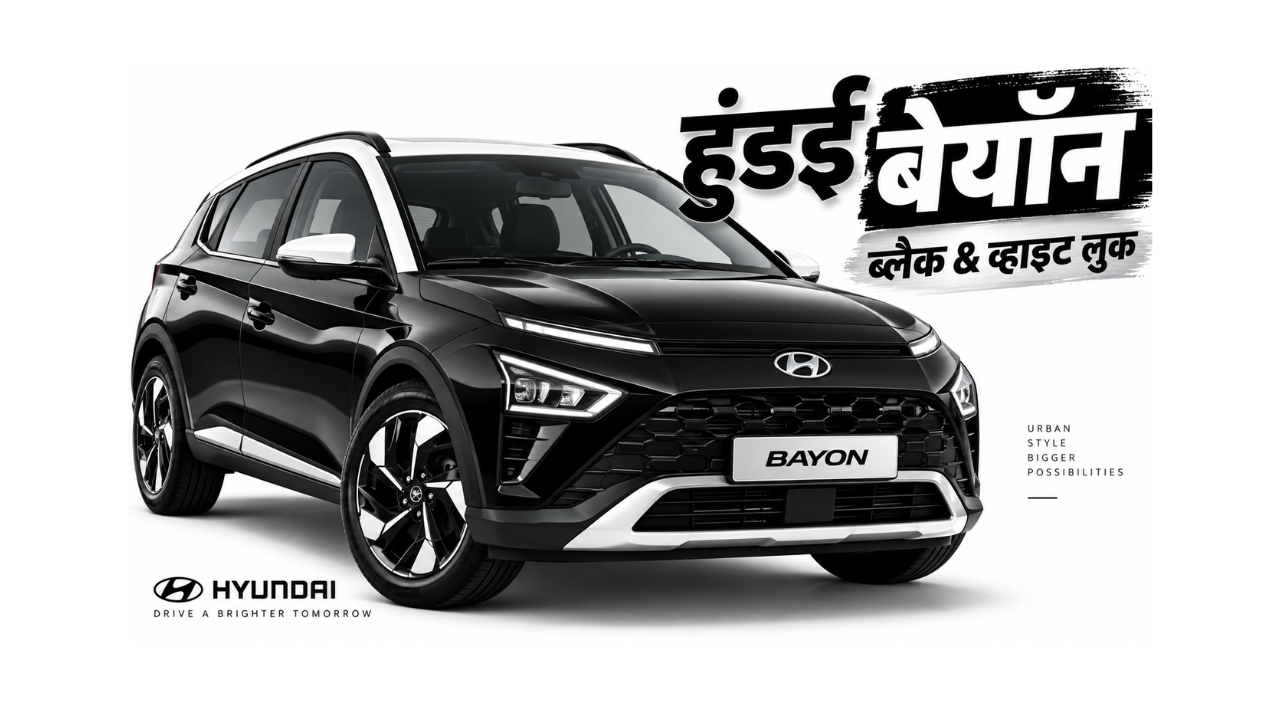
Hyundai Motor India officially announced the Bayon name on 14 September 2026. The company describes it as a new global SUV, and the name is inspired by Bayonne, a city in the French Basque Country.
The important thing for Indian buyers to understand is that there are two different Bayons:
- Global Bayon (since 2021): A small i20-based crossover sold in Europe, Turkey and parts of Central Asia, powered mainly by a 1.0-litre turbo-petrol engine.
- India-spec Bayon (2026): A new, larger SUV that will slot between the Venue and the Creta, to be just over four metres long, with a different powertrain line-up.
That is why you will see conflicting engine figures online. This article separates them clearly.
India-Spec Hyundai Bayon Engine Specifications
As per the most recent reports from Indian automotive publications, including Autocar India, the Bayon is to borrow the Creta’s proven 1.5-litre petrol engine.
| Specification | Hyundai Bayon 1.5 Petrol |
|---|---|
| Engine type | 1.5-litre, 4-cylinder, naturally aspirated petrol |
| Displacement | 1,497 cc |
| Max power | 115 PS (approx. 113 bhp) @ 6,300 rpm |
| Max torque | 143.8 Nm @ 4,500 rpm |
| Transmission | 6-speed manual, CVT automatic |
| Fuel options | Petrol, CNG (expected) |
| Drivetrain | Front-wheel drive |
Hyundai Bayon BHP (India)
The Bayon’s output is 115 PS, which converts to roughly 113 bhp. You will often see this written as “115 hp” in Indian media. All three figures refer to the same engine; the difference is only the unit (PS is metric horsepower, bhp is British horsepower, and 1 PS equals about 0.986 bhp).
Hyundai Bayon Torque (India)
Peak torque to be 143.8 Nm at 4,500 rpm. Because this is a naturally aspirated engine, torque builds higher in the rev range than it does on a turbo engine. In real-world driving, that typically means smooth, predictable city performance, while quick overtakes on the highway need a downshift or a firmer press of the accelerator.
Hyundai Bayon CNG
Reports suggest the 1.5-litre engine will also get a factory CNG option, likely with an underbody tank so that boot space is not badly compromised. If confirmed, the Bayon would be the first Hyundai longer than four metres to offer CNG. Official CNG power and torque figures have not been published yet; CNG versions of petrol engines usually produce somewhat lower output than the petrol version.
Will the Bayon Get a Turbo-Petrol Engine in India?
In 2025, reports said Hyundai was developing a new locally built 1.2-litre, 4-cylinder turbo-petrol engine that is hybrid-ready and would sit between its 1.0 turbo (120 hp, 172 Nm) and 1.5 turbo (160 hp, 253 Nm). Early reports linked this engine to the Bayon. The latest reports from September 2026, however, point to the 1.5 naturally aspirated petrol and CNG as the launch powertrains. A turbo option could still arrive later, but it is not confirmed.
- Tata Motors Upcoming Cars 2027 List

- 2026 Honda Elevate ADV Edition क्रेटा का खेल खत्म

- Hyundai Bayon vs Creta Dimensions

- Mahindra Vision S vs Thar Roxx 2026

- Mahindra Vision S 2026 Launch Date, Onroad price

Global Hyundai Bayon Engine, BHP and Torque
The European Bayon has been on sale since 2021. Here are its main engine options based on Hyundai UK technical data and established specification databases.
| Engine | Power | Torque | Gearbox |
|---|---|---|---|
| 1.2 MPi petrol (4-cyl) | 84 PS (83 bhp) | 118 Nm (approx.) | 5-speed manual |
| 1.0 T-GDi turbo (3-cyl) | 100 PS (99 bhp) @ 4,500–6,000 rpm | 172 Nm @ 1,500–4,000 rpm | 6-speed manual, 7-speed DCT |
| 1.0 T-GDi 48V mild hybrid (3-cyl) | 120 PS (118 bhp) @ 6,000 rpm | 172 Nm (up to 200 Nm on some versions) | 6-speed manual, 7-speed DCT |
The 1.0 T-GDi engine is a 998 cc, three-cylinder, DOHC unit with a 71 x 84 mm bore and stroke. Hyundai’s UK data lists 0–62 mph in about 10.4 seconds and a top speed of around 115 mph for the 120 PS version.
This same 1.0 turbo family already powers the Venue and i20 N Line in India, so Indian buyers are familiar with it.
Hyundai Bayon vs Rivals: Engine Comparison
| Model | Engine | Power | Torque |
|---|---|---|---|
| Hyundai Bayon | 1.5 NA petrol | 115 PS | 143.8 Nm |
| Hyundai Creta | 1.5 NA petrol | 115 PS | 143.8 Nm |
| Hyundai Venue | 1.0 turbo petrol | 120 PS | 172 Nm |
The comparison shows why the Bayon makes sense in Hyundai’s line-up: it offers the Creta’s engine in a more affordable package, while CNG adds a running-cost advantage that neither the Venue turbo nor the Creta petrol currently offers.
What This Engine Means for Buyers
Reliability and familiarity. The 1.5 petrol has been used in the Creta, Verna and Seltos-platform cars for years, so parts, servicing and mechanic familiarity are well established across India.
Smooth automatic option. A CVT is generally smoother and more comfortable in traffic than a DCT, which suits city-heavy buyers and first-time automatic owners.
Lower running costs with CNG. For high-mileage users such as daily commuters and fleet buyers, the CNG option could be the most practical choice.
Performance expectations. Enthusiasts who want strong mid-range punch may find a turbo engine more exciting. If performance matters most to you, wait for official specs or look at turbo options in the segment.
Launch and Price
Hyundai is expected to launch the Bayon in the 2026 festive season. Reports suggest a price range of roughly ₹9 lakh to ₹14 lakh (ex-showroom), placing it below the Creta. Interior teasers point to a dual-screen dashboard setup, and features such as ADAS are widely .
Frequently Asked Questions
What is the BHP of the Hyundai Bayon?
The India-spec Hyundai Bayon is to produce about 113 bhp (115 PS) from its 1.5-litre petrol engine. The global Bayon’s 1.0 turbo makes 99 bhp (100 PS) or 118 bhp (120 PS), depending on the version.
What is the torque of the Hyundai Bayon?
The India-spec Bayon to deliver 143.8 Nm at 4,500 rpm. The global 1.0 turbo version produces 172 Nm between 1,500 and 4,000 rpm.
Which engine will the Hyundai Bayon get in India?
Current reports point to the Creta’s 1.5-litre, 4-cylinder naturally aspirated petrol engine, with a CNG option. Hyundai has not officially confirmed the specifications yet.
Is the Hyundai Bayon turbocharged?
The global Bayon uses a 1.0-litre turbo-petrol engine. The India-spec Bayon launch with a naturally aspirated 1.5-litre engine, although a turbo option has been reported in the past.
Does the Hyundai Bayon have a diesel engine?
There is no confirmed diesel engine for the India-spec Bayon. The expected line-up is petrol and CNG.
Which gearbox will the Hyundai Bayon have?
A 6-speed manual and a CVT automatic are expected for the India-spec model.
Is the India-spec Bayon the same as the European Bayon?
No. They share a name, but the India-spec Bayon is a different, larger SUV positioned between the Venue and the Creta.
When will the Hyundai Bayon launch in India?
It is to launch during the 2026 festive season. Hyundai has confirmed the name but not the exact launch date.