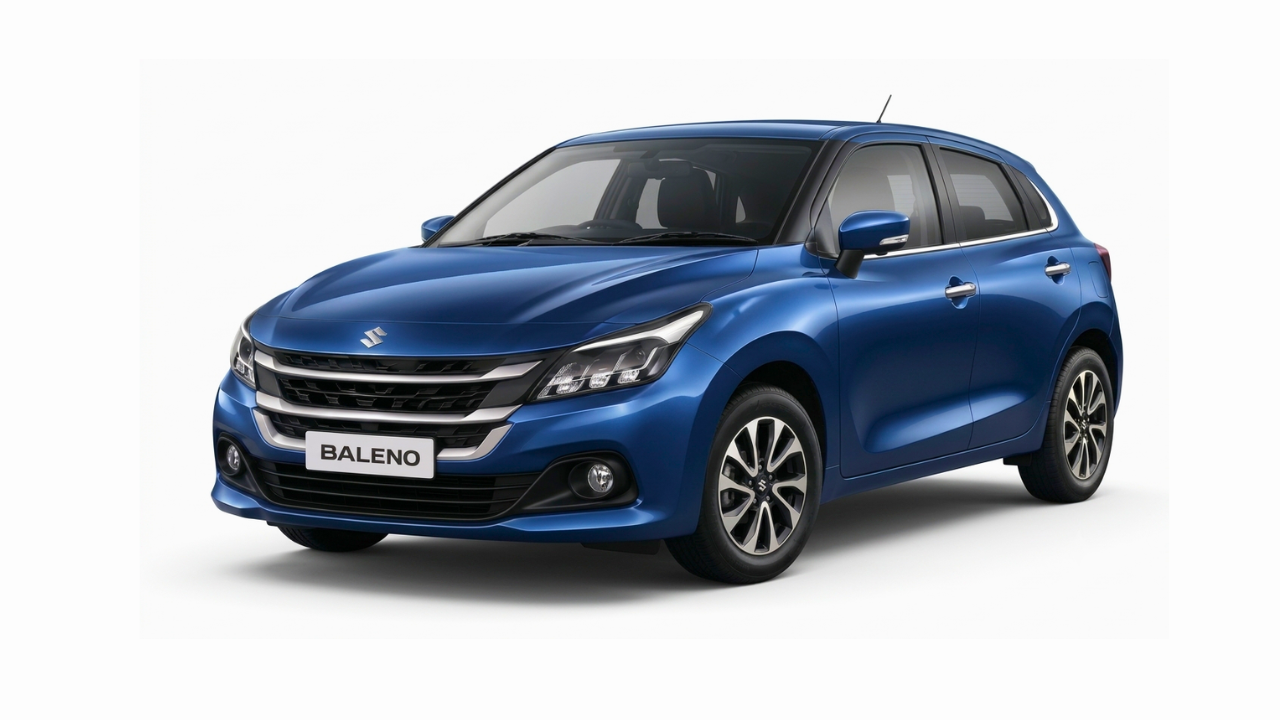
The 2026 Maruti Baleno facelift has been launched in India at an introductory ex-showroom price of Rs 6.10 lakh for the base Sigma petrol-manual variant, going up to around Rs 9.37 lakh for the top-spec Alpha petrol-AMT variant. It comes with a new 1.2-litre three-cylinder Z-series petrol engine, Level 2 ADAS, ventilated front seats, and Maruti’s first-ever CNG-AMT combination. ARAI-claimed mileage stands at 23.80 kmpl for the manual, 24.77 kmpl for the AMT, and 33.61 km/kg for the CNG version. The range is spread across four trims: Sigma, Delta, Zeta, and Alpha.
Here is a complete, easy-to-scan breakdown of everything you need to know before booking one.
Maruti Baleno Facelift 2026 Price in India
Maruti Suzuki has priced the updated hatchback as a festive introductory offer, meaning these numbers may rise slightly once the launch window closes.
| Variant | Fuel/Transmission | Approx. Ex-Showroom Price |
|---|---|---|
| Sigma | Petrol Manual | Rs 6.10 lakh |
| Delta | Petrol Manual/AMT, CNG | Rs 7.0–7.8 lakh (est.) |
| Zeta | Petrol Manual/AMT, CNG | Rs 8.0–8.7 lakh (est.) |
| Alpha | Petrol Manual/AMT | Up to Rs 9.37 lakh |
The base Sigma trim costs about Rs 20,000 more than the outgoing pre-facelift Baleno, which is a modest premium considering the new engine and added safety kit. Bookings are open at NEXA dealerships and on Maruti Suzuki’s official website for a token amount of Rs 11,000.
- Tata Aeris Tata Tigor Successor Sedan 2026
- Tata Aeris On-Road Price 2026 All Cities

- Facelifted Cars Launching in India Soon 2026
- Tata Aeris CNG Mileage 27km/kg

- Mahindra Vision S vs Thar Roxx 2026

Mileage: How Fuel-Efficient Is the New Baleno
Fuel efficiency has always been the Baleno’s strongest selling point, and the facelift pushes those numbers even higher with its new engine.
- Petrol Manual (MT): 23.80 kmpl
- Petrol Automatic (AMT): 24.77 kmpl
- CNG: 33.61 km/kg
All figures are ARAI-certified. The CNG version is especially significant because it now comes paired with an AMT gearbox, making the Baleno the first Maruti Suzuki passenger vehicle to offer a factory-fitted CNG engine with an automatic transmission. This solves a long-standing gap for buyers who wanted low running costs without giving up the convenience of an automatic.
Engine and Powertrain Details
The biggest mechanical change on the 2026 Baleno is under the hood. Maruti has replaced the older four-cylinder unit with a new 1.2-litre, three-cylinder Z-series naturally aspirated petrol engine.
- Petrol engine output: 82–83 PS and 112–113 Nm
- CNG engine output: 70 PS and 102 Nm
- Transmission choices: 5-speed manual and 5-speed AMT
- CNG-AMT: available for the first time on a Maruti Suzuki car
This new engine family is shared with other recent Maruti models like the Swift and Dzire, and it is tuned to prioritise city driveability and running costs over outright performance.
Top Model: Baleno Alpha Variant Explained
The Alpha trim sits at the top of the Baleno facelift lineup and is the one to pick if you want the fullest feature set. It is priced at roughly Rs 9.37 lakh (ex-showroom) for the petrol-AMT configuration and includes the highest safety and comfort specification in the range, including Level 2 ADAS, ventilated front seats, and the largest touchscreen unit on offer. Notably, the range-topping Alpha and Alpha(O) trims do not get the CNG powertrain option, so buyers who specifically want CNG will need to look at the mid-spec Delta or Zeta trims instead.
Key New Features on the 2026 Baleno Facelift
The facelift brings several segment-relevant upgrades over the outgoing model:
- Level 2 ADAS (Advanced Driver Assistance Systems) on higher variants, a segment-first for the Baleno
- Ventilated front seats for improved comfort in hot climates
- Wireless phone charger
- New 9-inch SmartPlay Pro+ HD touchscreen infotainment system
- Clarion sound system with Arkamys-tuned Surround Sense audio
- Rear AC vents, new on this generation
- Auto-dimming inside rearview mirror (IRVM)
- Six airbags as standard across the range
- Head-up display, carried over from the pre-facelift model
- Automatic climate control and cruise control, carried over
- CNG-AMT powertrain option, a segment and brand first
Two features notably remain absent even after this update: a sunroof and a rear centre armrest, both of which some rivals in this segment already offer.
Design Changes on the Outside
Visually, the facelift keeps the Baleno’s familiar silhouette while sharpening the front end. It gets a larger chrome grille for stronger road presence, a reworked front bumper, updated headlamps with new DRLs, and a repositioned Suzuki badge. The 16-inch alloy wheels also get a mildly revised design. Changes to the sides and rear are far more subtle and easy to miss at a glance.
Colour Options
The 2026 Baleno is offered in seven exterior colours, including one new shade called Enigmatic Teal, alongside familiar options like Nexa Blue, Grandeur Grey, Arctic White, Splendid Silver, Opulent Red, and Bluish Black.
Interior and Cabin Updates
Inside, Maruti has kept the overall dashboard layout unchanged, with its curvy design, silver insert, free-standing touchscreen, and slim central AC vents. The twin-dial analogue instrument cluster paired with a TFT multi-information display continues from the older model. The rear seat remains one of the more spacious in its class, which has traditionally made the Baleno a favourite with family buyers who prioritise back-seat comfort.
Rivals and Market Positioning
The updated Baleno continues to compete in the premium hatchback space against the Hyundai i20, Tata Altroz, Toyota Glanza (its own platform sibling), and the Maruti Suzuki Swift. Its combination of high fuel efficiency, a wide variant spread, and now Level 2 ADAS keeps it relevant in a segment where buyers increasingly expect SUV-like safety tech in a compact footprint.
Frequently Asked Questions
What is the price of the Maruti Baleno facelift 2026? It starts at an introductory Rs 6.10 lakh (ex-showroom) for the base Sigma petrol-manual variant and goes up to approximately Rs 9.37 lakh for the top Alpha petrol-AMT variant.
What is the mileage of the new Baleno facelift? The ARAI-claimed mileage is 23.80 kmpl for the manual petrol, 24.77 kmpl for the automatic (AMT) petrol, and 33.61 km/kg for the CNG version.
Which is the top model of the Baleno facelift? The Alpha variant is the top model, offering the fullest features including Level 2 ADAS, ventilated seats, and the largest touchscreen, though it does not offer a CNG option.
Does the new Baleno get a sunroof? No. Despite the update, the Baleno facelift still does not offer a sunroof or a rear centre armrest.
Is CNG available with an automatic gearbox on the Baleno? Yes. The 2026 Baleno facelift introduces a CNG-AMT combination, a first for any Maruti Suzuki passenger vehicle, though it is offered only on the Delta and Zeta variants and not on the top-spec Alpha.
Does the Baleno facelift get ADAS? Yes, higher variants of the facelift come equipped with Level 2 ADAS, a segment-relevant safety upgrade over the outgoing model.




1 thought on “Maruti Baleno Facelift 2026: Price, Mileage, Top Model and Features”