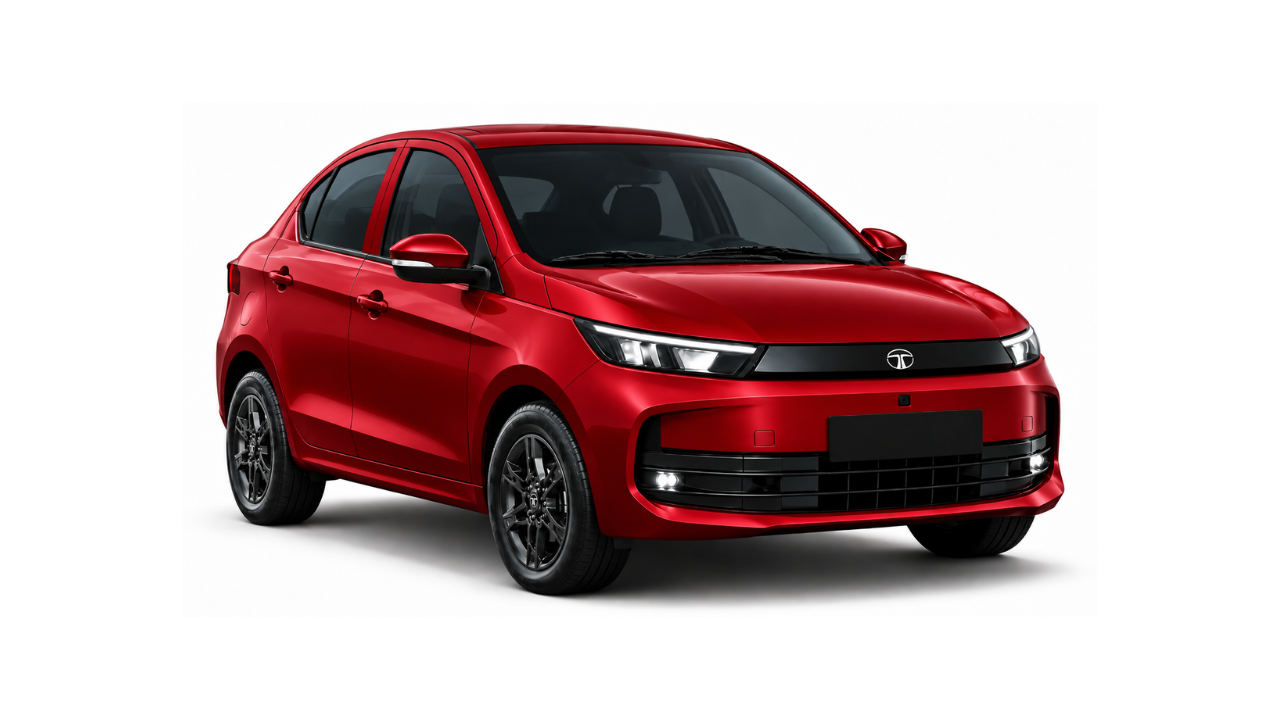
The Tata Aeris is the official successor to the Tata Tigor, launched in India on September 25, 2026, at a starting price of Rs 5.29 lakh (ex-showroom), which is about Rs 40,000 cheaper than the outgoing Tigor. It is a sub-4-metre sedan built on the same platform as the Tigor, sharing its interior architecture with the recently updated Tata Tiago. The Aeris gets a fully reworked exterior design, a 10.25-inch touchscreen, ventilated front seats, up to 6 airbags, and continues with 1.2-litre petrol and petrol-CNG engine options paired with 5-speed manual or AMT gearboxes. Deliveries begin on November 11, 2026.
Below is a detailed breakdown of the Aeris, covering its design, features, safety, pricing, and how it compares with rivals such as the Maruti Dzire and Honda Amaze.
Why Did Tata Rename the Tigor to Aeris
The Tigor nameplate had been on sale in India since 2017, and while it received periodic updates over the years, its core product and positioning stayed largely the same. With this generation, Tata Motors chose to retire the Tigor name entirely and introduce the car as the Aeris instead. The word “Aeris” comes from Latin and roughly translates to “of the air,” a name intended to reflect the car’s smoother design, airier cabin, and more efficient powertrains.
The renaming also aligns with Tata’s broader brand shift toward “Tata.Cars” as its new passenger vehicle identity. By dropping the Tigor name, Tata gets to present the new sedan as a fresh chapter rather than inviting constant comparisons with the car it replaces, particularly important in a market where compact sedan buyers have increasingly shifted toward SUVs and crossovers.
Launch Date and Price
The Tata Aeris was officially launched in India on September 25, 2026. Prices start at Rs 5.29 lakh (ex-showroom, Delhi) for the base Smart petrol-manual variant and go up to Rs 9.19 lakh for the top Accomplished CNG trim. Bookings are open across Tata dealerships and on the official Tata website, with deliveries scheduled to begin on November 11, 2026.
| Variant | Petrol MT | Petrol+CNG MT |
|---|---|---|
| Smart | Rs 5.29 lakh | Rs 6.29 lakh |
| Pure | Rs 6.14 lakh | Rs 7.14 lakh |
| Pure Plus | Rs 6.74 lakh | Rs 7.74 lakh |
| Creative | Rs 7.49 lakh | Rs 8.49 lakh |
| Accomplished | Rs 8.19 lakh | Rs 9.19 lakh |
All prices are introductory and ex-showroom, Delhi. AMT gearbox pricing was yet to be announced at launch.
It is worth noting that Tata will continue selling the existing Xpres sedan to fleet and taxi operators, while the Aeris will be positioned exclusively for private, individual buyers.
- Facelifted Cars Launching in India Soon 2026

- Tata Aeris CNG Mileage 27km/kg

- Tata Aeris Tata Tigor Successor Sedan 2026

- Tata Aeris On-Road Price 2026 All Cities

- Tata Aria On-Road Price 2026

Design and Styling
The Aeris carries over the Tigor’s familiar “notchback” silhouette, which looks more like a sleek hatchback with a boot than a conventional three-box sedan, but nearly every visible panel and detail has been reworked.
At the front, it gets a slim gloss-black grille flanked by rectangular LED headlamps, along with a sculpted bumper that houses LED fog lamps. In profile, the car features new 16-inch alloy wheels, a sharkfin antenna, wheel arch cladding, and Aeris badging on the lower edge of the front doors. At the rear, a high boot lid, a roof spoiler, and a connected LED tail lamp setup give it a family resemblance to the larger Tata Curvv. The rear bumper is also redesigned and integrates the number plate housing and a reverse lamp.
Colour Options
The Aeris is offered in six colour choices, giving it one of the boldest palettes in its segment:
- Dandeli Drizzle (Purple)
- Daytona Grey
- Nitro Crimson (Red)
- Dune Glow (Gold)
- Pure Grey
- Pristine White
Each of these shades is also available with an optional dual-tone treatment that adds a contrasting black roof.
Interior and Cabin
Inside, the Aeris borrows heavily from the recently facelifted Tata Tiago’s dashboard layout, but uses a lighter beige and cream colour theme for a more open, airy feel compared to the Tiago’s darker cabin. The dashboard retains sharp, angular design cues, along with fabric inserts and a two-spoke steering wheel finished in matte black.
The centre console includes rotary dials for climate control, a rotary gear-shift selector on AMT variants, a wireless phone charger with a dedicated phone dock, and a central armrest. AMT versions also come with paddle shifters for manual gear control. At the rear, Tata says the cabin offers a spacious feel for the car’s size, helped along by dedicated rear AC vents and a rear centre armrest with cupholders.
Boot Space
The Tata Aeris offers a boot capacity of 419 litres, which is a competitive figure for the sub-4-metre sedan segment and should comfortably handle a family’s luggage needs.
Key Features
Despite its budget-friendly starting price, the Aeris comes loaded with features you would expect on a well-equipped modern sedan:
- 10.25-inch touchscreen infotainment system with wireless Android Auto and Apple CarPlay
- 4-speaker sound system
- Automatic climate control
- Cruise control
- Wireless phone charger
- Ventilated front seats
- Power-adjustable and auto-folding ORVMs
- Height-adjustable driver seat
- Auto-dimming inside rearview mirror
- Keyless entry with push-button start/stop
- Multiple selectable drive modes
Safety Equipment
Safety has been rounded out significantly compared to the outgoing Tigor. Standard equipment across the range includes 6 airbags, three-point seatbelts with reminders for all occupants, rear parking sensors, and ISOFIX child seat anchors.
Higher variants add electronic stability control, rain-sensing wipers, hill hold assist, a tyre pressure monitoring system, a built-in dashcam, rollover mitigation, and a 360-degree camera with blind view monitor.
Engine and Gearbox Options
The Aeris carries forward the same fundamental powertrain lineup as the Tigor, keeping things simple and proven rather than introducing an all-new engine.
| Engine | Power | Torque | Transmission |
|---|---|---|---|
| 1.2L Naturally Aspirated Petrol | 86 PS | 113 Nm | 5-speed MT / 5-speed AMT |
| 1.2L Petrol with Factory-Fitted CNG Kit | 76 PS (on CNG) | 97 Nm (on CNG) | 5-speed MT / 5-speed AMT |
The CNG variant uses a factory-fitted dual-cylinder kit, which typically offers better boot space efficiency and safety assurance compared to aftermarket CNG conversions.
Frequently Asked Questions
Is the Tata Aeris the same as the Tata Tigor? The Aeris effectively replaces the Tigor in Tata’s lineup. It is built on the same underlying platform and continues with the same core engine options, but it receives a comprehensively redesigned exterior, a new interior theme, and a longer feature list, which is why Tata chose to give it a new name instead of calling it a Tigor facelift.
What is the price of the Tata Aeris? The Tata Aeris starts at Rs 5.29 lakh (ex-showroom, Delhi) for the base petrol-manual variant and goes up to Rs 9.19 lakh for the top-spec petrol-CNG automatic-ready variant.
When will the Tata Aeris be delivered to customers? Bookings are open now, and deliveries are scheduled to begin on November 11, 2026.
Does the Tata Aeris get a CNG option? Yes, it is available with a factory-fitted dual-cylinder CNG kit alongside the standard petrol engine, across most variants.
What is the boot space of the Tata Aeris? The Tata Aeris offers 419 litres of boot space.
Which cars will the Tata Aeris compete against? The Aeris will primarily rival the Maruti Suzuki Dzire, Honda Amaze, and Hyundai Aura in the sub-4-metre compact sedan segment.
Does the Tata Aeris get an automatic gearbox? Yes, both the petrol and petrol-CNG engines are available with a 5-speed AMT automated manual transmission, in addition to the standard 5-speed manual gearbox. Pricing for the AMT variants was not announced at the time of launch.
How the Tata Aeris Compares to Key Rivals
Buyers cross-shopping the segment have a few strong alternatives to consider alongside the Aeris.
The Maruti Suzuki Dzire remains the most popular car in this segment, backed by a modern feature list, fuel-efficient powertrains, and Maruti’s extensive sales and service network. The Honda Amaze is positioned as a more premium option, offering a higher-quality interior, a segment-first ADAS suite, and a refined petrol engine. The Hyundai Aura, while comparatively dated in design, remains relevant thanks to a quiet cabin, a smooth AMT gearbox, and a plush ride that continues to appeal to both private and fleet buyers.
The Aeris differentiates itself through sharp styling, a strong equipment list for its price point, and pricing that undercuts the outgoing Tigor, making it one of the more value-focused options in the segment at launch.